Micro market software, for a shop with no shopkeeper.
Open shelves, one checkout, and nobody behind the counter.
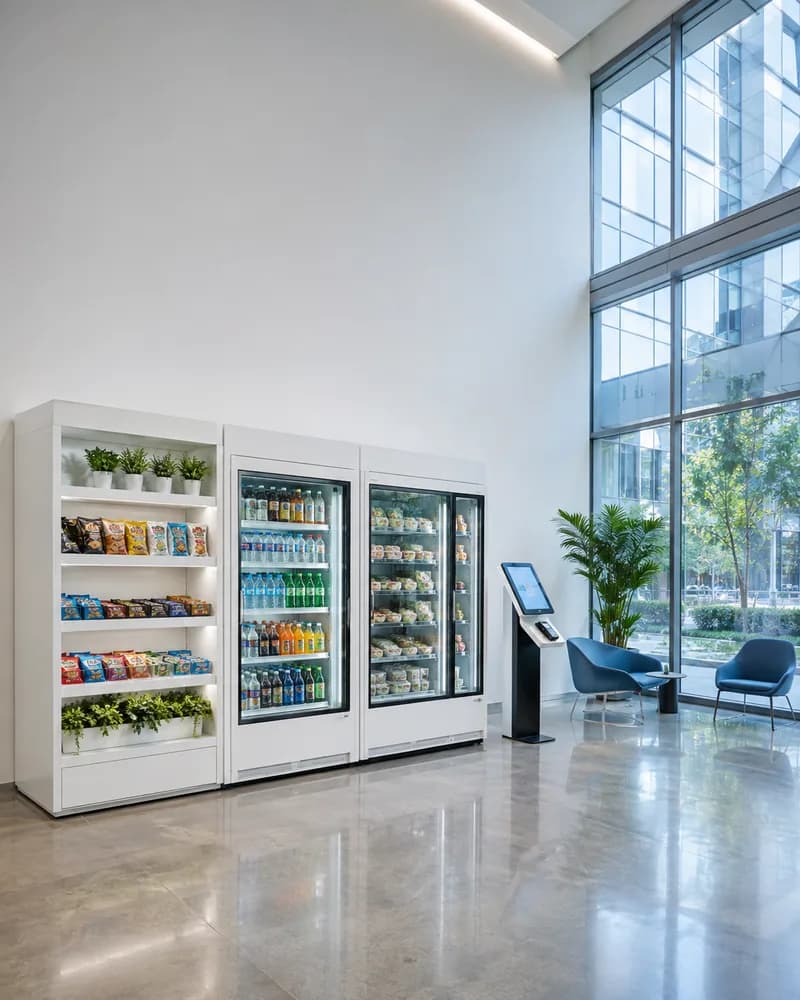
A micro market is a small unattended store: open shelving, a cooler or two, and a self-checkout terminal where a machine front used to be. The software is what makes that work without staff, and what keeps it honest. We build the checkout, the accounts people pay from, the loss prevention around an open shelf, and the reporting a site owner and an operator both need to see.
What micro market software has to get right
A market is not a bigger vending machine. Taking the glass away changes the checkout, the payment, and the way stock goes missing, and those are the parts we build.
The self-checkout terminal
Scan, weigh, pay, and go, in a flow fast enough that a queue never forms at lunchtime. Barcodes for packaged goods, scale and lookup for loose items, and a screen simple enough that a first-time user does not need help.
- Barcode scanning and product lookup
- Scale support for loose and fresh items
- Card, wallet, and QR payment
- Receipt by screen, print, or email
Accounts, payroll deduct, and prepaid balances
Most markets sit in a closed environment, so the payment is often not a card. We build member accounts topped up at the kiosk or online, payroll deduct files for the employer, and subsidy rules where a company pays part of the basket.
- Member accounts and prepaid top-ups
- Payroll deduct exports for the employer
- Employer subsidy and discount rules
- Badge, PIN, or app sign-in at the terminal
Shrinkage, cameras, and loss prevention
An open shelf loses stock in ways a machine never did, and the answer is visibility rather than a lock. Expected stock is compared against what actually sold, cameras are tied to the transaction record, and a site trending the wrong way shows up before the quarter does.
- Expected versus actual stock variance
- Camera footage linked to transactions
- Per-site shrinkage trends and alerts
- Age and identity checks on restricted items
Fresh food, coolers, and planograms
Fresh is where a market earns its margin and where it loses it. Shelf life is tracked per item, coolers report their temperature, and markdown or removal is prompted before something is sold past date rather than after.
- Shelf life and expiry tracking per item
- Cooler temperature monitoring and alerts
- Markdown and removal prompts
- Planograms set centrally per site
Multi-site rollout and management
The first market is a pilot and the tenth is an operation. Sites, product ranges, and pricing are managed centrally, with a site owner able to see their own numbers without seeing everybody else's.
- Central product, price, and range control
- Per-site reporting and read-only logins
- Restock runs across markets and machines
- Roles and permissions across the team
Converting a break room from machines to a market
The common project is not a greenfield build, it is replacing two machines in a break room with an open market and keeping the machines that still earn. We build so the market and the remaining machines report into one place instead of two.
- Markets and machines in one estate view
- Product data carried across from vending
- Phased conversion, site by site
- Full code and data ownership
A single control room for a distributed vending estate
A vending build rather than a micro market one, and it is here because the operating problem is the same: unattended retail across many sites, with one dashboard showing what is in each location, what sold, what it earned, and who needs to visit which site next.
Read the case study- 01Live machine map and telemetry
- 02Real-time sales and profit and loss
- 03Inventory and low stock alerts
How the work runs
Tell us what you need
A short written brief is enough to start: what you are building, the stack it has to live in, and the problem behind it. Someone technical reads it, not a sales rep.
passed when we reply with questions and a proposed shape
Scope and quote
We agree what the first release contains and what it costs before anything is built. Anything we cannot estimate honestly gets scoped on its own rather than padded into the total.
passed when the scope and the quote are agreed
Build in the open
Working software arrives in increments, in your repository, with our commits visible from the first week. Progress is something you can open and run, not a status report.
passed when a real user is doing a real job in it
Iterate, then hand over
What the first release teaches sets the priority for the next one. When you want it in house, documentation and a handover period are part of the engagement rather than an extra.
passed when your team can run it without us
How pricing works
Fixed price per milestone
You approve each milestone and its price before it starts, so the cost is known before the work is rather than after. Milestones are sized to be worth reviewing on their own.
Monthly rate for a dedicated team
A set team at a set monthly cost, with notice rather than a minimum term. Priorities move between sprints without renegotiating anything.
Scoping first, quote after
We work out what it should be with you before quoting it. There is no charge for that conversation and no obligation to go ahead.
Frequently asked questions
What you get, shelf to dashboard
Every build ships end to end, from first scope to live deployment and ongoing support.